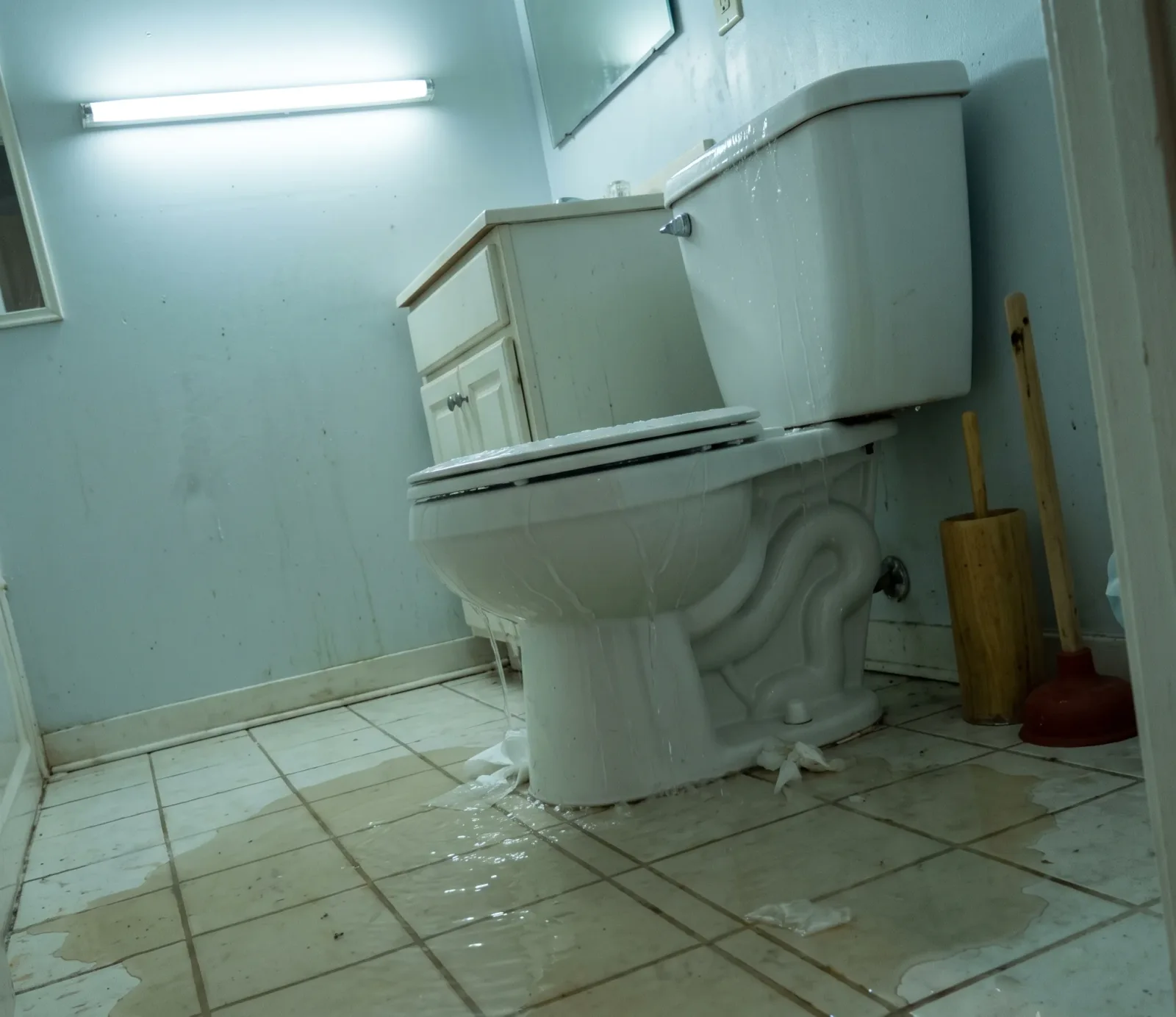
A toilet backing up raw sewage instead of draining is one of the messiest problems a Tempe homeowner can face. This is contaminated water carrying bacteria, not a plumbing nuisance to shrug off. Before anyone touches a mop, the first minutes matter more than the cleanup itself. Stop the source, protect the people in the house, and hold the mess in one place until help arrives.
Shut Off The Water Source
Reach behind the toilet and shut the small valve on the supply line first. If the bowl keeps rising anyway, the trouble sits past the fixture, likely a blocked sewer line under the slab. Tempe homes sit on concrete slab foundations, so a main line clog pushes waste back up through the lowest fixture instead of draining away, and that's usually the toilet.
Clear The Room, Add Ventilation
Turn off water at the toilet's own valve first, low on the wall behind the base, before you touch anything else. That stops fresh backflow from adding more contaminated water to what already sits on your floor. Pull on gloves before contact with raw sewage. Open a window for ventilation, block off the room, and keep pets and kids away until the licensed pros we connect you with arrive with proper biohazard gear.
Gloves On Before Anything Else
Put on rubber gloves before touching anything near the overflow, and keep a second pair nearby for household members. Skin contact with contaminated water is how cross contamination usually starts, carried on hands to doorknobs, phones, and light switches. If skin does touch the water, wash immediately with soap. Anyone with an open cut or a weak immune system should stay out of the room entirely until it's disinfected.
When A Plunger Still Helps
If the bowl is only partway full and not actively overflowing, one steady push with a flanged plunger may clear the block and stop things from getting worse. Don't force repeated pushes if the water keeps rising instead of dropping. Once it backs up past the rim, put the plunger down. At that point the clog sits deeper in the sewer line, past where a bowl-level tool can reach it.
Contain It To One Room
Lay old towels, a shower curtain, or plastic sheeting in a ring around the toilet base to keep the spread contained to one room. Don't reach for the good towels since anything touched by this water should be treated as a total loss. A cracked wax ring at the base can also let water seep under the floor, so check for water pooling outward from the base itself, not just from the bowl.
Stop Walking Through The Mess
Once the area is contained, leave the room and don't go back in to check on it repeatedly. Every trip through tracks contaminated water onto hallway flooring, and Tempe's slab-on-grade construction means that moisture has nowhere to drain except sideways across the house. Shut the door, note the time the backup started, and wait for someone trained in Category 3 water to take it from there.
Sort What Can Be Saved
Anything porous that touched the water, bath mats, toilet paper, unsealed cardboard, magazines left on the floor, counts as an affected item and should go straight into a trash bag, not the laundry. Washing contaminated fabric in a home machine just spreads bacteria into the next load. Hard, sealed items like a plastic trash can or tile floor can often be disinfected later instead of thrown out.
Where Bleach Actually Works
A bleach solution can wipe down hard, nonporous surfaces the water touched, like tile, a toilet exterior, or a sealed vanity base, once the standing water is gone. Skip it on drywall, carpet, or wood, since bleach doesn't reach contamination that has already soaked into the material. Mixing bleach with any other cleaner releases fumes, so use it alone in a ventilated room.
When It Keeps Coming Back
Left alone, sewage-soaked flooring and baseboards near McClintock Drive or Rural Road rental units can breed bacteria within hours, not days. Cross contamination spreads fast once someone walks it into carpet or a hallway. Bag affected items you can't bleach-solution clean, keep pets and kids out, and let the space air out with real ventilation before anyone spends time in there again.
Calling In Category 3 Help
Once the source is shut off and the room is contained, the next call should go to a restoration service equipped for Category 3 water, not a general cleaning crew. Standing sewage that sits for more than a few hours starts working into subflooring and baseboards, and Tempe's dry heat can bake odor into porous materials faster than it would in a milder climate. Waiting overnight rarely helps and often adds cost.
Older Lines, Root Intrusion Risk
Homes near Mill Avenue and older sections of Maple Ash sometimes carry original sewer laterals that have never been relined, which makes root intrusion a more frequent cause of backup than in newer construction. A camera inspection of the line, done after the immediate mess is handled, can confirm whether the clog is a one-time event or a sign the pipe itself needs work.
Dealing with this in your home?
A rental near Apache Boulevard can run fine through the summer, then take on water when a flood irrigation gate off Warner Road stays open too long. Tempe's caliche layer barely drains, so water pools against the slab foundation and finds the door faster than an ASU student expects.