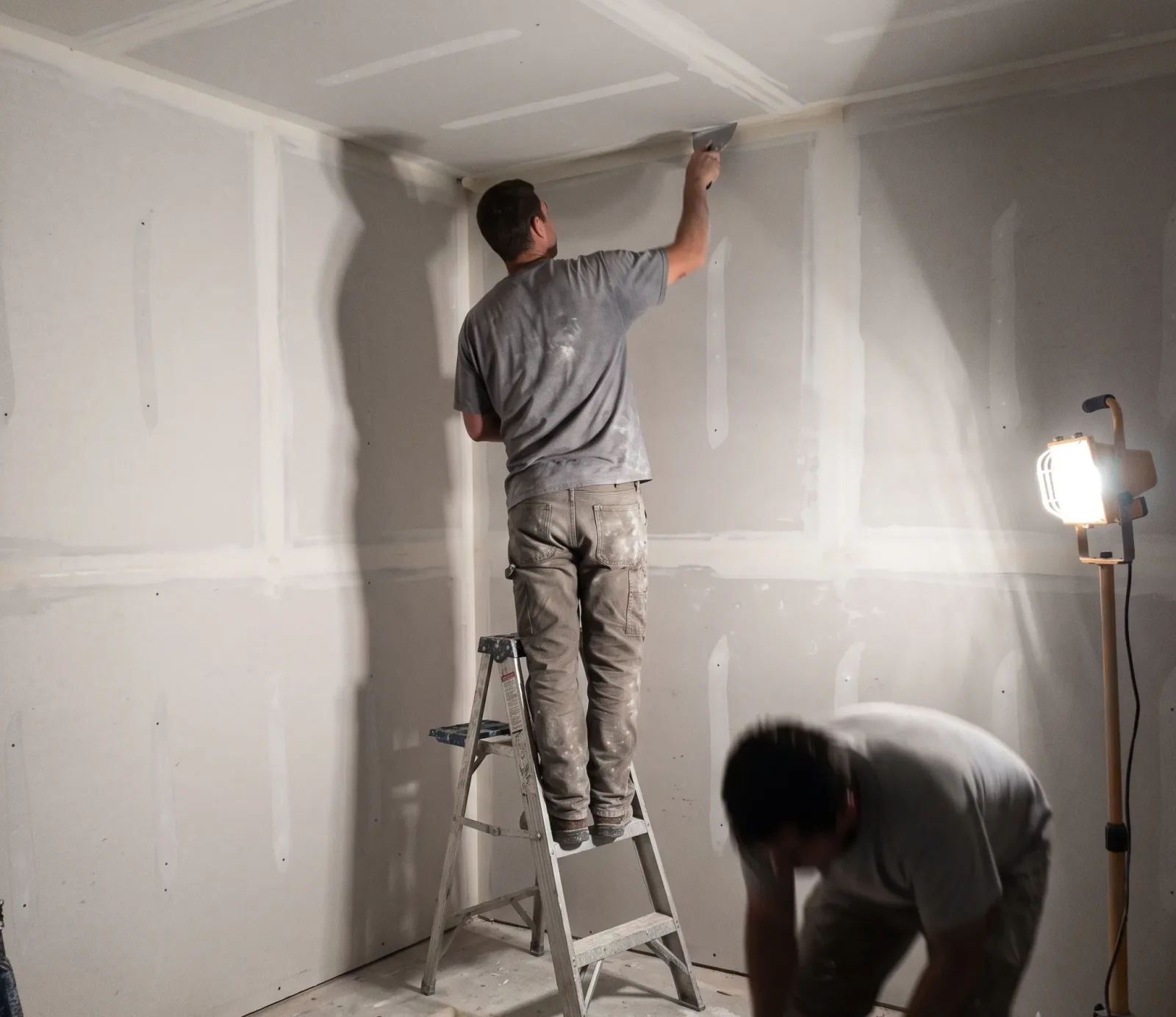
What Happens During Reconstruction After Water Damage in Tempe, AZ
What rebuilding a Tempe home looks like once drying is done, from framing to final walkthrough.
Reconstruction is the rebuild phase after drying is complete: framing repair, insulation replacement, drywall, subfloor and flooring replacement, cabinetry, trim, and painting, finishing with a punch list and final walkthrough. Permits and Arizona Registrar of Contractors licensing apply depending on the scope of work involved.
Where Drying Ends and Rebuild Begins
Rebuilding after water damage in Tempe starts once drying equipment comes out and the structural drying phase is finished. What follows is a construction job: drywall replacement, subfloor replacement, flooring installation, and often cabinetry near a kitchen or laundry area. A home near Mill Avenue or out toward Warner Ranch gets rebuilt the same way — the sequence matters more than the neighborhood, though the materials involved can shift the timeline and cost.
Framing repair comes first if wall studs or floor joists were compromised, since drywall and flooring installation depend on a sound structure underneath. Insulation replacement usually happens at the same stage, tucked behind new drywall before it goes up. Skipping ahead to cosmetic work on a frame that is still out of square is how a homeowner near Escalante or Riverside ends up paying twice for the same wall.
Baseboard and trim removal typically happens early too, before flooring goes down, since trim usually needs to come off to cut wet drywall cleanly at the bottom of a wall. The pros who handle this in Tempe generally save trim that survived and order matching replacement for what did not. This detail sounds minor until a mismatched baseboard profile shows up during the final walkthrough.
Drywall, Insulation, and Framing Repair
Rebuild pricing in Tempe depends mostly on how many rooms took damage and whether cabinetry or subfloor needs replacing, not just square footage. A single bathroom with new drywall and flooring installation costs far less than a Maple Ash living room needing framing repair, insulation replacement, and trim work. Get a written breakdown before signing, so the punch list matches what was actually torn out near Rural Road or Kyrene Road.
Arizona requires a Registrar of Contractors license for construction and repair work, including water damage rebuilds, when the job costs more than $1,000 or when a permit is required, whichever comes first. This applies the same in Tempe as anywhere else in Maricopa County. A homeowner near Kyrene Road or Dorsey Lane hiring for a full rebuild should confirm the contractor holds an active ROC license before signing anything.
- Drywall replacement starts once moisture readings on studs and framing come back dry, not just the surface. Cutting too early traps damp material behind a fresh patch near Warner Ranch or Maple Ash homes.
- Baseboard and trim removed during extraction usually can't go back on. Water swells the fibers, and reinstalling warped trim in a Riverside rental leaves gaps that show up within weeks.
- Subfloor replacement matters most under tile or vinyl near Tempe Town Lake condos, where slab moisture wicked up before drying finished. A soft or spongy subfloor under new flooring is a callback waiting to happen.
- Insulation replacement applies to attic runs soaked by a roof leak during monsoon season, not slab moisture. Wet insulation loses its R-value and won't dry back to spec once compressed.
- Framing repair comes up when a stud or sill plate softened from standing water, common where a flood-irrigation gate near Warner Road ran too long against a fence line and exterior wall.
- Cabinetry near a kitchen or laundry leak often needs the base replaced even when the upper boxes are fine. Particleboard toe-kicks swell first and rarely reset once wet.
Subfloor, Flooring, and Baseboard Replacement
Code compliance during a rebuild covers more than the visible finish. An inspector checking framing repair or electrical work behind a wall wants to see it done to current code, not just to match what was there before the loss. This is separate from cosmetic choices like paint color or a textured finish, which are up to the homeowner and do not need sign-off from the city.
Flooring replacement choices in a Tempe rebuild often depend on what caused the damage in the first place. A slab-level water intrusion from a monsoon storm near Rio Salado Parkway calls for materials that tolerate residual slab moisture better than others. A contractor should explain why they are recommending one flooring type over another for that specific spot, not just installing whatever is in stock.
- Painting comes after drywall replacement and texture, not before. Priming over a patch that hasn't fully cured near a Kiwanis Park-area home shows lap marks once the paint dries.
- Textured finish work has to match the existing wall pattern, which older Tempe homes near Escalante or Holdeman often did by hand, not with a spray hopper.
- Flooring installation timing depends on the subfloor passing a moisture check first. Installing tile or engineered wood over a slab that's still reading high traps vapor underneath.
- A punch list at the end catches the small stuff — a baseboard gap, an outlet cover, a texture mismatch — before the job is called finished, not after a tenant near ASU moves back in.
Same Crew or Two Companies Compared
Drywall replacement is usually cut back further than the visibly wet section, since moisture can wick upward inside a wall cavity beyond where a stain shows. A rebuild crew working on a rental near ASU or a house off Apache Boulevard should be documenting moisture readings before closing the wall back up, not guessing at the cutback line. Closing over damp material undoes the drying work that came before it.
Painting comes near the end of the sequence, after drywall is hung, taped, and textured to match the surrounding wall. Matching an existing textured finish is a real skill — a patch that looks smooth next to orange-peel or knockdown texture stands out under any light. This is one of the more common punch list items on a Tempe rebuild, since texture mismatches are easy to miss until the room is repainted.
| Factor | One Company Handles Both | Separate Drying and Rebuild Firms |
|---|---|---|
| Handoff between phases | Same file, no gap | Paperwork and drying logs re-explained |
| Timeline control | One schedule, one point of contact | Rebuild waits on a second bid |
| Moisture readings before drywall | Same techs verify their own numbers | Second crew trusts a stranger's readings |
| Insurance documentation | One continuous claim file | Two invoices, two scopes to reconcile |
| Warranty on finished work | One party stands behind the whole job | Unclear who covers a callback |
Permits, Code Compliance, and Inspections
Cabinetry replacement comes up often in kitchen and laundry-area losses, especially where a water heater or supply line failure near the base of a cabinet run soaked the toe kick and lower panels. Matching existing cabinetry exactly is not always possible, so a homeowner near Hayden Ferry Lakeside or Tempe Marketplace might face a choice between a close match on visible runs and a full replacement for consistency.
A rental near Apache Boulevard or College Avenue, full of ASU students, faces the same rebuild sequence as a house off Warner Road or Elliot Road: framing checked, insulation replaced where it got wet, drywall hung, texture matched, then paint. Property managers near campus often move faster on scheduling since a vacant unit during rebuild costs them rent every week it sits unfinished.
Questions Worth Asking Before Rebuild Starts
Kitchens and bathrooms take longer than a bedroom because more trades touch them. Cabinetry has to come out or get reset, subfloor gets checked for warping under tile or vinyl, and flooring installation waits until plumbing and electrical are signed off. A single-family home near Holdeman or Escalante with a flooded kitchen might spend more calendar time waiting on cabinet lead times than on the actual labor.
Insurance involvement usually shapes the order of operations too, since an adjuster may need to see damage or approve a scope before demolition proceeds past what drying required. A homeowner near Guadalupe Road or Southern Avenue working through a claim should ask their contractor how the rebuild scope lines up with what the adjuster has approved before material orders go in.
Rebuild Phase at a Glance
- Permits get pulled once framing, electrical, or plumbing is opened up during rebuild; drywall-only cosmetic patching in a Tempe home usually skips that step.
- Arizona has no separate mold remediation license; that work falls under general ROC contractor licensing if cost or permit thresholds are met.
- The City of Tempe Building Safety Division issues permits, including over-the-counter permits for smaller repair jobs.
- Rebuild work above roughly $1,000 in labor and materials legally needs a Registrar of Contractors license under Arizona statute, no matter how small the crew.
- Nearly all Tempe homes sit on slab-on-grade foundations, so rebuild work centers on flooring, drywall, and cabinetry base, not basement framing.
- Cabinetry and trim salvaged during teardown rarely match new stock exactly, so most Tempe rebuilds replace baseboard and cabinet bases as a matched set instead.
Frequently Asked Questions
What happens after the drying crew leaves?
Not usually. Once a licensed pro documents that a wall has dried to normal levels, it can be closed back up without a separate clearance test, since Arizona has no state-mandated post-remediation testing standard. Some homeowners in Tempe request third-party air or moisture testing anyway before drywall goes back up, which is a reasonable extra step, not a requirement.
Do I need a licensed contractor for rebuild work?
Yes, if the scope goes beyond cosmetic patching. Arizona requires a Registrar of Contractors license once labor and materials exceed $1,000 or a permit is required, whichever comes first. A drywall patch in a Maple Ash rental may skip a permit, but framing repair after a Tempe monsoon leak usually needs one.
Does drywall replacement always need a permit?
Yes. Tempe's Building Safety Division issues permits, but the line between permit-exempt cosmetic repair and permit-required structural, plumbing, or electrical work depends on scope. Ask the pro handling your Escalante or Riverside property to confirm before framing repair or subfloor replacement starts.
Why did flooring bubble after it was replaced?
Because caliche hardpan under most Tempe lots drains slowly, a slab that took on water during monsoon season can hold moisture longer than expected. If flooring or baseboard was replaced too soon, trapped moisture under the new material can surface weeks later near University Heights or Holdeman homes.
Does a mold license cover the rebuild crew?
No. Arizona has no separate mold license; remediation work like removing contaminated drywall falls under general contractor licensing if it crosses the $1,000 or permit threshold. A rebuild passing final walkthrough addresses the water damage on record, not future moisture from a new source.
Ready To Start The Rebuild?
If your Tempe home or ASU-area rental is past the drying stage and needs drywall, flooring, or framing put back, get a rebuild estimate from a licensed pro before signing off on the work.
Call (480) 681-1520