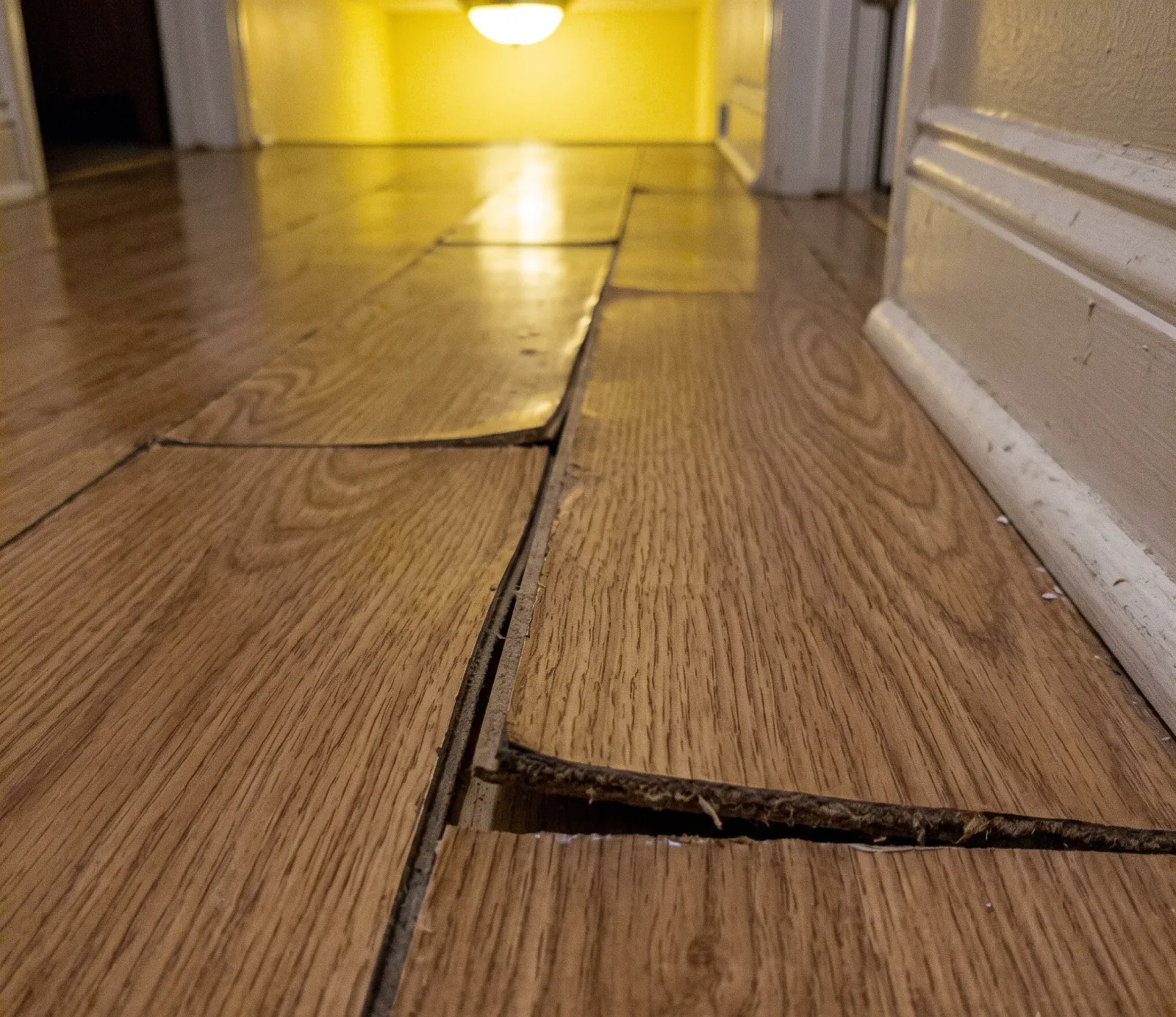
Filing a Water Damage Insurance Claim in Tempe, AZ
What a Tempe policy actually pays, and the paperwork that gets a water claim approved.
In Tempe, a standard homeowners policy generally pays for water damage from a pipe that splits or an appliance that fails suddenly, but not for gradual leaks, groundwater, or flood irrigation overflow without a separate flood endorsement. Notify your insurer right away, photograph everything before cleanup, and keep every receipt tied to mitigation for your proof of loss.
What To Photograph Before You Touch Anything
A water heater tank splits in a Warner Ranch garage, or a supply line fails under a kitchen sink near Kiwanis Park, and the next hour matters more than the next month. Tempe homeowners who slow down, shut off the source, and start writing down what happened tend to get paid faster than those who wait and hope the mess sorts itself out.
Notice of loss is the call or app report that starts the file: your address, when the water showed up, and a plain sentence on what caused it. Carriers expect this promptly, not after the drywall is already cut out. Waiting a week to report a leak near Mill Avenue gives an adjuster room to question the timeline before they even see the property.
Separate from reporting the loss, most policies require you to hold the damage where it is. Turn off the water main, unplug anything near standing water, and open windows if the air is dry enough to help. A homeowner in the Maple Ash area who lets a leak run for days risks the insurer arguing the added damage was avoidable and not their responsibility to cover.
Getting The Notice Of Loss Filed
Before anything gets pulled out or dried, photograph the damage from multiple angles: wide shots of the room, close shots of the source, and anything the water touched, from baseboards to cabinet bottoms. A rental near ASU with soaked carpet in a shared living room needs the same record as a house off McClintock Drive, because the adjuster's file starts with what you captured, not what you remember.
Set damaged items aside instead of putting them out for trash pickup. Bag or box ruined belongings and store them somewhere dry, since the adjuster may need to see quantities and condition before approving replacement cost. Save every receipt tied to the loss too, fan rentals, a short motel stay near Tempe Marketplace, anything spent because the home wasn't livable during dryout.
- Walk the property near Hayden Butte or Kiwanis Park before touching anything wet. Shoot wide shots of each room, then close-ups of baseboards, cabinet toe-kicks, and flooring where the water actually sat.
- Note the date, approximate time, and suspected source right when you find it: a slab leak, a failed water heater, or monsoon runoff pooling against the house near Tempe Town Lake.
- Send your notice of loss to the insurer in writing rather than a phone call alone, so there's a dated record if the claim stalls or the adjuster's timeline slips.
- List every damaged item room by room with rough purchase dates, since this list becomes the basis of your itemized estimate and shapes whether items pay at actual cash value.
- Hold off on tossing wet carpet, cabinetry, or baseboards near University Drive rentals until the adjuster has documented them, unless the delay risks mold or a safety hazard.
- Keep a running written record of who you spoke with at the insurer and what they said, since a denial often turns on what got promised versus what got put in writing.
What Happens When The Adjuster Shows Up
Most homeowners policies in this state respond to water damage that happens suddenly: a washing machine hose that blows out, a water heater that fails without warning, a toilet supply line that snaps. The common thread is an event with a clear start point, not a slow decline. A Tempe policy generally treats these as covered losses once the source is identified and stopped.
Arizona homeowners policies typically respond when a supply line snaps or a heater tank splits without warning, since that counts as sudden and accidental. Water that crept in over weeks, or damage tracing to a roof already leaking before the loss, usually falls under a policy exclusion. Flood irrigation overflow and monsoon runoff pooling against a Tempe slab foundation raise separate coverage questions an adjuster will want documented in the scope of work.
- A typical Tempe homeowners policy pays for sudden discharge from a failed supply line or a water heater that gives out without warning, but treats a slow slab leak differently once it reaches flooring.
- Runoff from a monsoon storm pooling at grade near Papago Park or the Salt River channel is generally excluded from a standard policy unless separate flood coverage was purchased.
- Backup through a floor drain or fixture during a heavy monsoon downpour commonly falls outside a base policy and needs its own endorsement added before it's covered.
- Mold that shows up right after a burst pipe or appliance failure is usually covered up to a limit, but mold from an ignored leak near Mill Avenue rentals often gets denied outright.
How Arizona Policies Actually Pay You
The adjuster who inspects a Tempe loss builds a scope of work, usually through Xactimate, listing each repair line item and its price. That scope becomes the number the insurer is offering to pay, but it's a starting figure, not a locked outcome. If drying crews find water that traveled further than the adjuster's first walkthrough showed, a supplemental claim can add those line items back in.
Payouts also split on actual cash value versus replacement cost. Actual cash value knocks off depreciation for a five-year-old water heater or worn flooring, paying what it was worth used, not new. Replacement cost value, if your Tempe policy carries it, pays the full cost to replace with something similar, often released in two payments, the second once repairs are finished and documented.
| Type Of Loss | Usually Covered | Usually Not Covered |
|---|---|---|
| Water heater bursts in the garage | Sudden water damage to floors, drywall | The worn-out water heater itself |
| Monsoon roof leak during a storm | Interior damage from the sudden leak | A roof already due for replacement |
| SRP flood irrigation gate left open | Little to nothing without added coverage | Ground-level flooding, treated as a flood loss |
| Slab leak under the foundation | Cutting the slab, drying the area out | Full slab replacement in some policies |
| Mold that shows up afterward | Suit deadline shortened by policy terms | Mold tied to a leak you ignored |
What To Do When The Payout Falls Short
A signed proof of loss is the sworn, itemized statement of what you're claiming and for how much, and most policies set a window for submitting it after the insurer asks. Miss that step, or leave out damaged items you later discover, and the file gets harder to reopen. Homeowners near Tempe Town Lake dealing with a burst line should ask their adjuster directly what proof of loss deadline applies before signing anything.
Know your deductible before any figure gets discussed, since it's subtracted from whatever the claim settles at no matter how the rest plays out. A public adjuster, hired independently by the homeowner rather than the insurance company, can be worth calling in on a larger loss, say a slab leak that spread through a Riverside-area home, if the insurer's number looks thin against the actual repair cost.
Deciding If A Public Adjuster Makes Sense
A denial doesn't have to be final. If the insurer points to a policy exclusion you believe doesn't apply, ask in writing for the specific language they're relying on, then respond with documentation, photos, moisture readings, a contractor's itemized estimate, that addresses their stated reason. Some denials near Escalante or University Heights get reversed once the homeowner shows the loss met the sudden-and-accidental standard the policy requires.
When the insurer's number and your contractor's estimate stay far apart after documentation is exchanged, check whether your policy carries an appraisal clause. Under it, each side picks an appraiser, the two pick a neutral umpire if needed, and the resulting figure becomes binding. It's a slower path than a phone call, but for a serious loss near Sun Devil Stadium or Papago Park, it can settle a stuck number without a lawsuit.
Numbers To Have Before You Call
- Arizona law bars insurers from unfair claim settlement practices under A.R.S. § 20-461, including stalling a valid claim, though it sets no fixed payout deadline for policyholders.
- Arizona courts generally enforce policy language that cuts the window for suing your insurer down to twelve months from the date of loss, so track that date carefully.
- Under the Arizona Residential Landlord and Tenant Act, A.R.S. § 33-1324, a landlord must keep plumbing and related systems in working order for ASU-area rental units.
- A.R.S. § 33-1363 lets a tenant repair a habitability issue and deduct the cost, but not if the tenant or a guest caused the damage in the first place.
- The City of Tempe Public Works Department takes storm drain reports at 480-350-4311, since blocked drains during monsoon season worsen flooding around homes and streets.
- Tempe's housing stock skews toward slab-on-grade construction from the 1970s through 1990s, per real estate data, which shapes how water spreads once flooring and drywall get wet.
Frequently Asked Questions
Will my policy cover this water damage?
Some Tempe renters near ASU assume a landlord's insurance automatically covers their belongings after a pipe break or ceiling leak. It typically does not. Renters need their own policy for personal property, while the landlord's coverage generally applies only to the building itself and required repairs under Arizona's habitability rules.
Is there a deadline to file my claim?
Arizona has no fixed statutory deadline for filing a first-party water claim, but your policy likely shortens the window to sue over a denial to as little as one year from the loss date. Notify your insurer in writing right away and start the mitigation clock.
Why is actual cash value lower than I expected?
Yes, but check your policy limits. A burst washing machine hose or water heater failure is typically covered, while damage from a flood-irrigation gate left open or long-term seepage often is not. Mold sublimits and separate deductibles can also apply, so read your policy carefully before assuming.
The adjuster's estimate seems low, what now?
Ask your adjuster for the itemized estimate and compare quantities and pricing line by line against a bid from a licensed contractor near Tempe Marketplace or Warner Ranch. If the numbers diverge sharply, most policies let you invoke the appraisal clause to settle the gap.
My claim got denied, what are my options?
Request the denial in writing with the specific policy exclusion cited, then have a contractor re-inspect the loss near Escalante or Maple Ash to see if the reasoning holds up. A public adjuster licensed in Arizona can negotiate the reversal or file a supplemental claim.
Ready to move your claim forward?
Get the loss on record near Mill Avenue or the Lakes before drywall comes out, then have the licensed pros we connect you with check the adjuster's numbers against a real bid.
Call (480) 681-1520