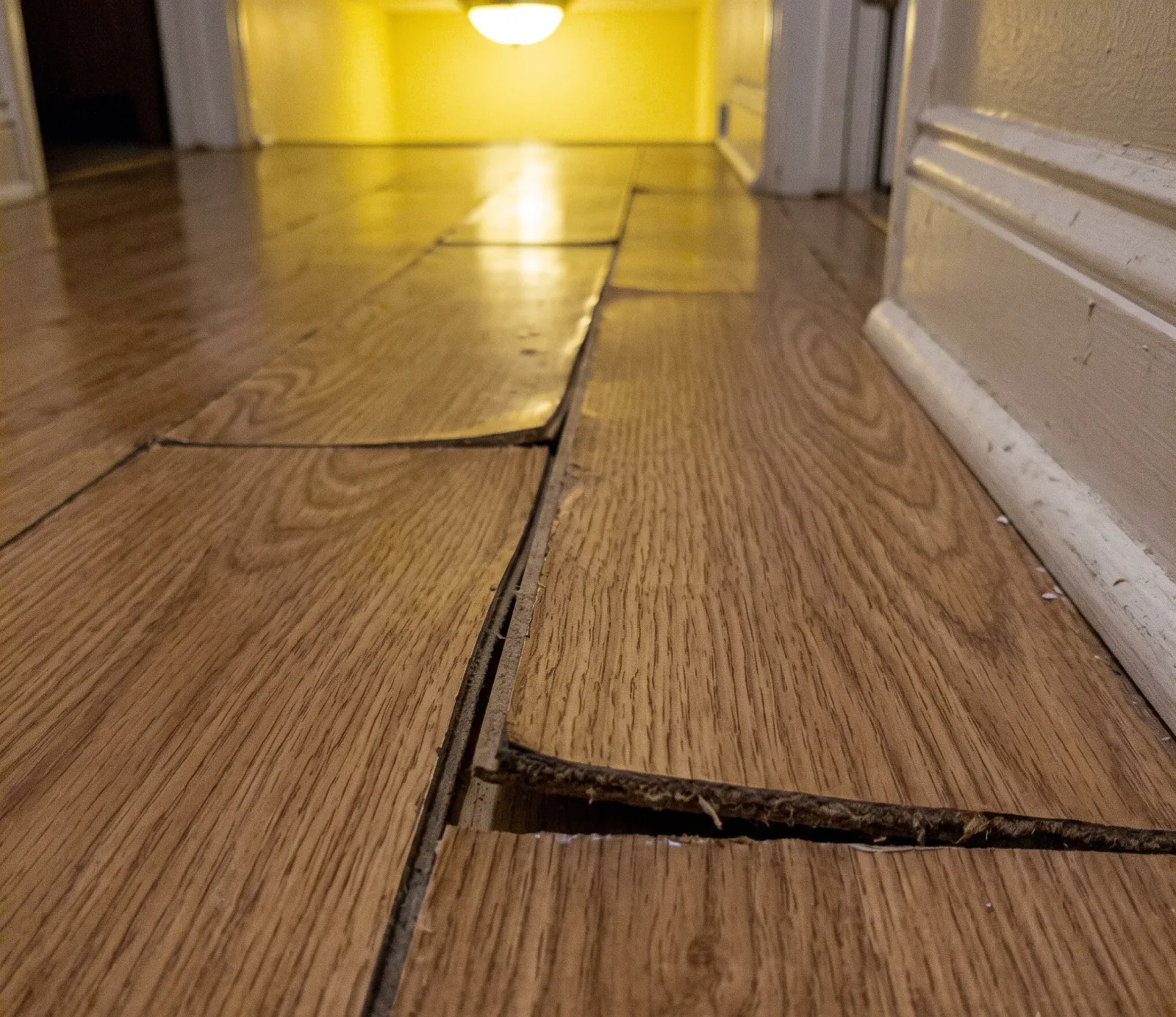
How Clay Soil Pushes Water Into Tempe Homes
Expansive clay, hydrostatic pressure, and how to tell a wet spot from a cracked wall.
Expansive clay around a Tempe foundation shrinks in dry weather, opening a gap that channels the next storm's water straight down against the slab. Slow-draining clay and caliche then hold that water in place, building hydrostatic pressure that pushes it through cracks and joints. Seepage is a water path issue restoration can fix; a moving foundation needs an engineer first.
Why Caliche and Clay Trap Water at Your Slab
Clay soil near a Tempe foundation swells when it takes on water and shrinks back down once it dries out. That shrink cycle pulls the soil away from the slab edge, leaving a narrow gap running along the foundation. The next monsoon downpour finds that gap and drops straight down it instead of running off across the yard, delivering water right against the footing where the slab has the least protection.
Once water reaches that gap it does not spread out and soak away the way it would in sandy soil. Caliche and clay layers common around Tempe are dense and slow-draining, so the water pools against the foundation wall or slab edge for hours or days after a storm. That standing contact is what drives moisture into the structure, not the rainfall total by itself.
Hydrostatic pressure is the push that builds once water stands against a wall instead of draining off. On a poured or block foundation, that pressure forces water through hairline cracks, mortar joints, and any gap around a pipe penetration. The longer water sits against a Tempe home's foundation after a storm rolls through, the more pressure builds and the more paths it finds inward.
The Gap That Opens, Then Fills With Monsoon Rain
Clay content in Tempe's soil pulls away from a foundation wall during our dry months, leaving a narrow gap that a monsoon downpour finds first. Water drops straight down that gap instead of spreading across the yard, so the ground beside the slab or a block wall gets soaked while the rest of the lot stays dry. That uneven soak is why one section of a wall seeps and the rest of the house stays fine.
Once water reaches the base of the wall, clay's slow drainage becomes the second half of the problem. Caliche and clay both resist percolation, so instead of soaking past the foundation, rain sits against the block or poured concrete for hours after a storm clears near Kyrene Road or Warner Ranch. That standing pressure pushes moisture through hairline pores and mortar joints long before a homeowner sees a visible puddle inside.
- Clay in the Tempe area swells when monsoon rain soaks it and shrinks back as it dries between storms, and that shrinking is what opens the gap next to a slab.
- A dry Tempe summer pulls clay away from a foundation wall, leaving a narrow channel right where a downpour needs somewhere to go. The next storm follows that channel down.
- Clay lets water through slowly compared to the sandier soils common elsewhere around Maricopa County, so rain sits against a wall for hours instead of draining off within minutes.
- Pouring water at a foundation to reseal a shrink gap can backfire near Papago Park's clay pockets: it drives moisture under the slab instead of sealing the surface crack.
- A poured concrete wall resists this pressure differently than concrete block, since block has mortar joints and hollow cores that give water more paths to travel through.
- Caliche hardpan layered under the clay in parts of Tempe compounds the problem, since it also resists drainage and can trap water between itself and the clay above it.
How Hydrostatic Pressure Pushes Through Block Walls
Telling the two apart matters because treating a structural issue like a seepage issue wastes money and leaves the real problem untouched. Drying a wet slab and sealing a crack does nothing for a foundation that is actually shifting on unstable clay. A homeowner near Warner Ranch or Riverside dealing with a recurring wet wall after every storm should look closely at whether the wall itself has moved before assuming it is only water.
Restoration work stays on the water side of that line: extracting standing water, drying out wet drywall and flooring, and running moisture readings until a slab or wall reads dry again. A restoration crew is not equipped to judge whether clay soil has shifted a footing, and a contractor who tells a homeowner otherwise is overstepping what the trade covers.
- A seepage problem shows up as damp walls, a musty smell, or water on the floor after storms, without any visible crack or shift in the slab itself.
- A structural problem shows a crack wider than a hairline, one that runs at an angle, or a wall that visibly leans or bows outward under pressure.
- Doors or windows sticking, uneven floors, or a crack that keeps reopening after patching point to movement in the slab, not just water finding its way in.
- Restoration crews handle the water and the damage it leaves behind; a licensed structural engineer needs to look at anything suggesting the foundation itself has shifted or cracked.
Seepage Problem or Structural Problem: Telling Them Apart
A wet patch on a wall or floor near Rio Salado Parkway or out toward Warner Ranch usually means water is finding a way in, and a restoration crew can dry that out and treat it. A crack that keeps widening, a door that suddenly won't close, or a slab that's visibly tilted is a different problem entirely, and it needs an engineer's judgment before any drying work starts.
Once an engineer has ruled out a structural cause, or repaired one, the water side of the job can proceed as its own project. Extraction, drying, and any drywall or flooring replacement follow the same process as any other water loss. Under Arizona Revised Statutes Title 32, work above a certain cost or requiring a permit needs a licensed contractor, which applies here the same as any other repair.
| Sign | What's Happening | Who You Call |
|---|---|---|
| Damp stain, no movement | Water wicking up through slab edge | Restoration crew handles drying, cleanup |
| Stain plus hairline crack | Clay pushed water against a static wall | Still likely a drainage fix, not structural |
| Crack wider than a pencil | Soil movement may be shifting the foundation | Call a structural engineer first |
| Door or window sticking | Frame racking from shifting slab beneath it | Engineer call, not a drying job |
| Recurring water, same spot | Grading or gutter routing water back to that wall | Fix the yard, not just the wall |
What This Means for a Tempe Slab Foundation
Tile grout lines cracking in a straight run, or a slab that feels slightly uneven underfoot in a Maple Ash or Escalante home, can trace back to clay pushing unevenly on the footing below. These are surface clues worth photographing before any repair starts. The licensed pros we connect you with can pull moisture readings at the base of interior walls to confirm whether the source is seepage from outside or a slab leak from within.
Flood irrigation adds another layer specific to this area. An SRP water day that floods a yard for hours puts far more water against a foundation than a single storm does, and on clay soil that water has nowhere quick to go. A homeowner running flood irrigation on a property anywhere from Baseline Road to Southern Avenue should watch for damp interior walls after each watering, not just after monsoon rain.
Questions to Ask Before Anyone Touches a Wall
Fixing the seepage side without addressing what is feeding it just buys time until the next storm or water day repeats the damage. Regrading away from the foundation, extending downspouts past the clay gap, and correcting a flood irrigation basin that pools too close to the slab all reduce how much water ever reaches the wall in the first place. None of that requires an engineer if the foundation itself has not moved.
The pros connected through this site handle the water damage itself: extraction, drying, and repair of anything the seepage soaked, whether that is drywall in a Maple Ash home or flooring near Escalante. When the damage points to a structural cause instead, they can say so plainly and point the homeowner toward an engineer before any drying work starts, rather than guessing at a problem outside their scope.
Seepage vs. Structural, Fast Check
- Caliche and clay layers under Tempe lots barely drain, so a hard monsoon burst near Kiwanis Park can sit against a wall for days before soaking in.
- Caliche hardpan layered beneath or within clay soil across Maricopa County slows drainage further, letting water stand against foundation walls longer than in sandier ground.
- Hydrostatic pressure builds against a wall whenever water pools beside it, pushing inward through pores in poured concrete or joints and cores in concrete block.
- A seepage problem shows damp walls or a musty smell with no crack; a structural problem shows a wide, angled, or reopening crack, or a leaning wall.
- Restoration crews handle water intrusion and the damage it causes; a licensed structural engineer is the right call once a wall or slab shows real movement.
- A crack that stair-steps through block, widens at one end, or lets a door stick near Escalante points to foundation movement, not a surface leak an extraction can fix.
Frequently Asked Questions
Why does water show up after a dry spell?
Not always. A damp wall after a storm with no cracking or movement is usually seepage, which the licensed pros we connect you with can dry and help seal. A diagonal crack, a door going out of square, or a lifted slab edge points to soil movement instead, and that calls for a structural engineer before any restoration work starts.
Is this a seepage problem or a structural one?
Seepage means water is finding a path through or around the wall without the wall itself moving. Structural means the slab or wall has cracked, shifted, or bowed. A restoration crew can address the water; only a licensed engineer should judge whether the structure itself is compromised.
Does clay soil affect every Tempe home the same way?
No. Clay content and depth vary across Tempe lots, and caliche hardpan sits at different depths from one yard to the next. A home near Papago Park's rockier ground can behave very differently than one on deeper clay closer to Tempe Town Lake.
Can flood irrigation make this worse?
It can. A flood irrigation cycle that runs long, especially near a slab foundation, adds the same standing-water pressure a monsoon storm does, just on a schedule instead of a surprise. Homes near Warner Ranch and similar flood-irrigated lots see this pattern more often.
Should I call an engineer or a restoration crew first?
Call a restoration crew first if you see water, dampness, or a musty smell with no visible crack. Call a structural engineer if you see a wide or angled crack, a leaning wall, or a crack that reopens after repair. The two problems need different trades.
Water Sitting Against Your Slab? Call Now
Not sure if that damp wall near your slab is a water problem or a foundation problem? Get a straight read from the licensed pros we connect you with before deciding who to call next.
Call (480) 681-1520