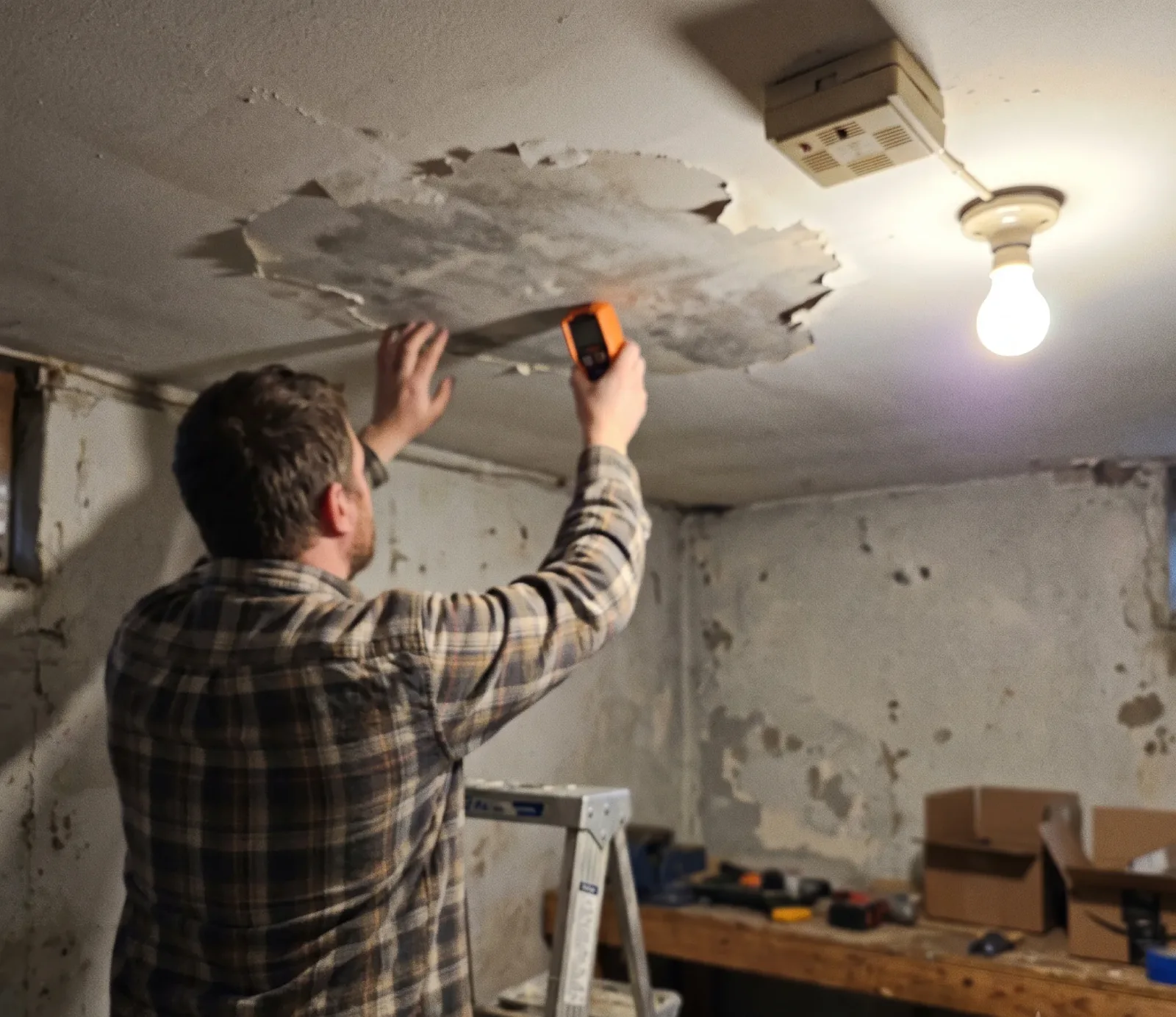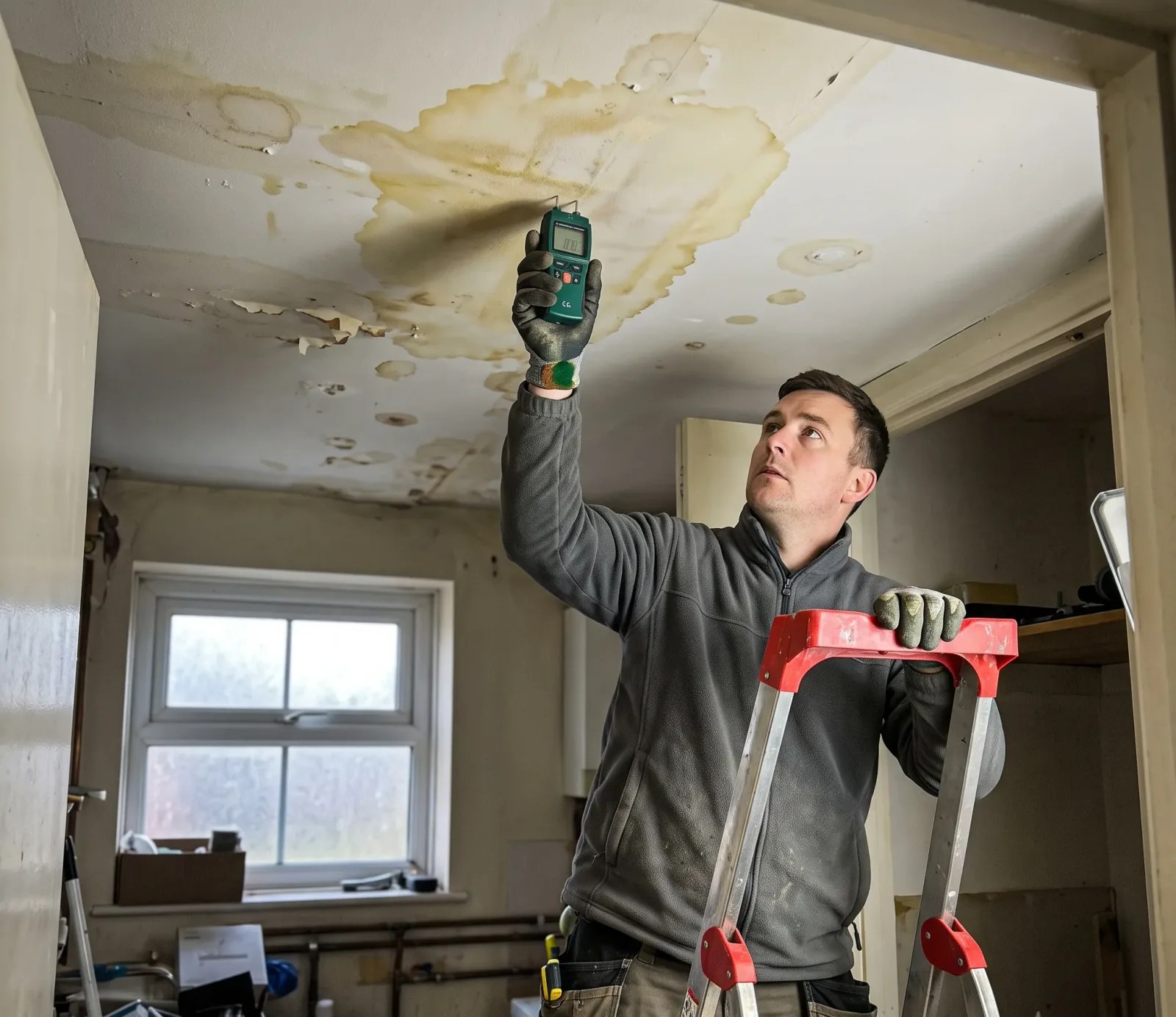
A moisture meter doesn't guess at damp drywall or subflooring, it reads it. Pin meters push two small probes into the material and measure resistance between them; pinless meters rest flat on the surface and send a signal into it. Both return a number a Tempe tech can compare against material that never got wet in the first place.
Pin Versus Pinless Basics
A pin meter's probes puncture drywall paper or wood and give a reading tied to moisture content between the two points, useful when a tech needs a precise depth. A pinless meter uses electromagnetic sensing through the surface without marking it, good for scanning a wide section of a Tempe living room wall or floor fast before deciding where to cut or drill.
What The Number Means
Wood moisture equivalent is the scale most meters display, even on drywall or other materials, because the readings were originally calibrated against wood. That number isn't a percentage of water by weight on non-wood material, it's a relative scale for comparison. What matters isn't one reading alone, it's how far that reading sits above material that's known to be dry.
Why A Baseline Matters
Before trusting any reading in a Tempe home, a tech takes a reference reading on unaffected material, maybe a wall a room away from the leak, or ceiling drywall that never got touched. That baseline reading accounts for the specific batch of drywall, the paint, the humidity in the house that day. A single number without a baseline tells a tech almost nothing.
Reaching A Dry Standard
A dry standard isn't zero on the meter, it's a reading that matches the baseline from unaffected material within a small margin. A Tempe tech drying out a kitchen after a water heater failure keeps checking the affected drywall and subfloor against that number, and only calls the job finished once readings hold steady near baseline across more than one visit.
Where Pin Meters Fit Best
Pin meters earn their place when a tech needs a reading at a specific depth, not just at the surface, since the two probes can be pushed farther into thicker material or angled to check inside a wall cavity. That makes them useful on baseboards, wood subflooring near Mill Avenue rental units, or framing members where surface-only sensing would miss where the water actually sits.
Where Pinless Meters Fit Best
One tradeoff worth flagging: pinless meters scan through flooring or drywall using a sensor pad, which is fast but reads a broader zone, not one exact spot. A tile floor near Mill Avenue or a plaster wall in an older Maple Ash home can throw the reading off because material density varies. That's when switching to a penetrating probe, accepting the small holes it leaves, settles what the scan alone can't.
Material Density Changes Readings
Material density affects both meter types, since a pinless sensor reads differently through dense tile backer than through drywall, and a pin meter's resistance reading shifts with wood species or drywall composition. A tech working a Tempe condo near Hayden Ferry Lakeside has to know what's actually behind a wall before trusting a raw number, since the same reading can mean different things in different material.
Calibration And Consistency
Calibration keeps a meter's readings consistent from one job to the next, and a tech checking a rental near Apache Boulevard today should get a comparable number to one checked last week on a different property. Meters drift over time and get checked against a known reference, since a miscalibrated meter can call a wet wall dry or the reverse, undermining every reading taken with it that day.
One Tool Among Several
A moisture meter usually works alongside a thermal camera and a visual walk-through during a Tempe inspection, since a camera can flag a cool patch on a wall near Tempe Town Lake but can't confirm water is actually there. The meter is what turns a suspected wet spot into a documented moisture content number a tech can track toward dry standard over multiple visits.
What A Homeowner Can Ask
A renter near ASU or a homeowner in Escalante can ask a straightforward question before hiring anyone for a leak check: does the inspection include both meter types, or just one? A pin meter confirms actual moisture content at a specific depth. A pinless scan covers ground faster across a wider wall or floor section. Knowing which tool answered the question tells you how much to trust the number given.
Judgment Still Matters Here
The value in a moisture meter reading isn't the raw number, it's what a tech does with it: comparing it against baseline, tracking it across visits, and knowing when material density or an odd material mix near ASU-area rentals might be skewing things. A meter gives a Tempe homeowner something documented to point to, not a verdict that needs no judgment behind it.
Dealing with this in your home?
A rental near Apache Boulevard can run fine through the summer, then take on water when a flood irrigation gate off Warner Road stays open too long. Tempe's caliche layer barely drains, so water pools against the slab foundation and finds the door faster than an ASU student expects.