Religious Institutions & Nonprofits
Religious Institutions & Nonprofits
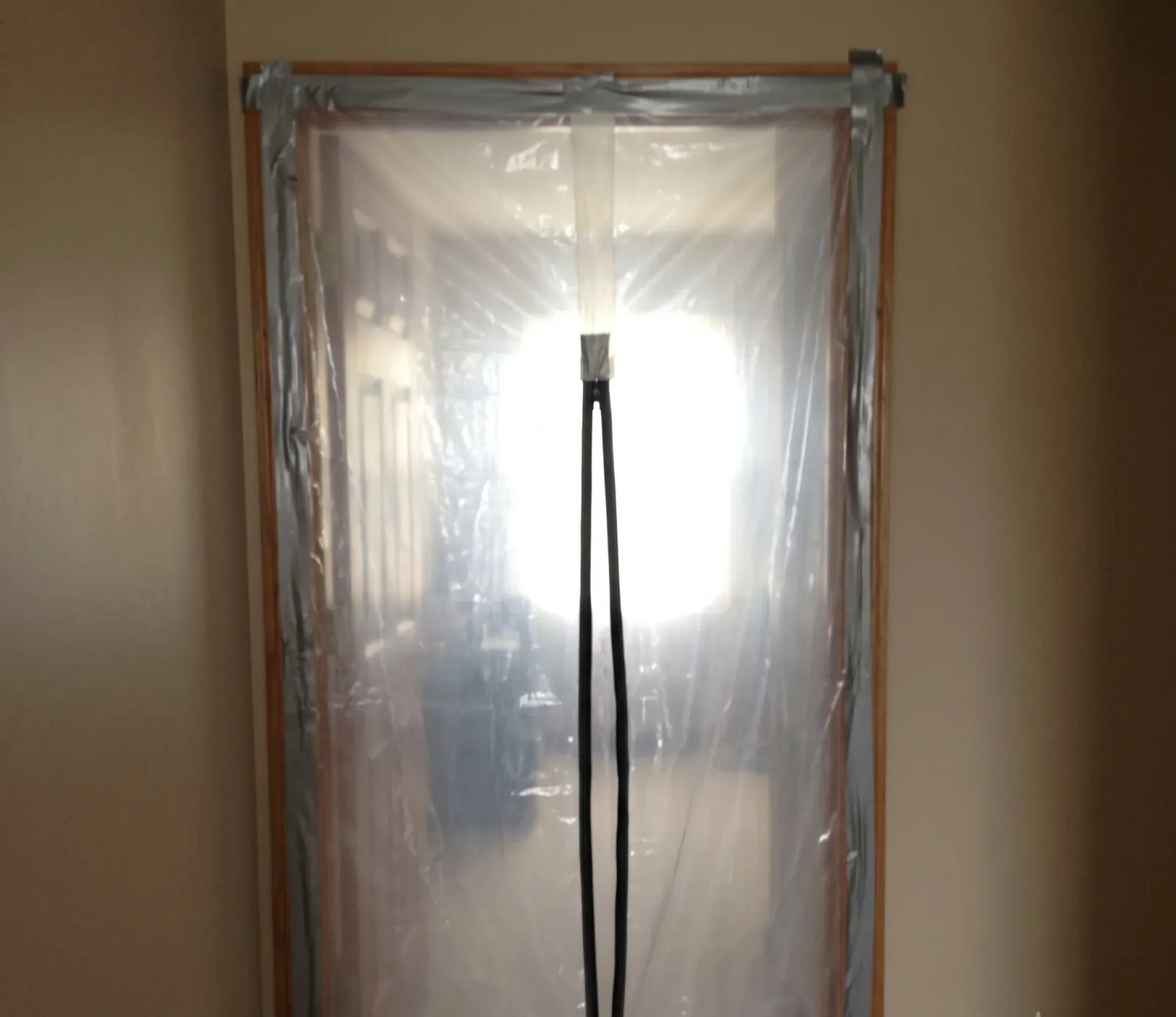
Drying and containment planned around infection control, not a standard office cleanup.
A clinic or medical office in Tempe needs infection-control-aware drying, not a standard extraction job, because exam rooms and sterile supply areas often can't reopen until moisture, HVAC risk, and airborne contaminant levels are documented and cleared for patient safety.
A leak inside a Tempe clinic or medical office is a different problem than the same water hitting a retail suite. Exam rooms, patient rooms, and anywhere sterile supplies sit carry infection control weight a shop lease never has. The response has to protect patient safety first, not just the drywall and flooring underneath it.
Tempe's medical offices range from small practices near Southern Avenue and McClintock Drive to larger buildings closer to Baseline Road, plus clinics serving the dense rental population around Arizona State University. Whatever the size, the building sits on a slab foundation like nearly every structure in the city, so water moves along the floor fast, not down into a basement.
This page covers what makes a medical office or clinic different from any other Tempe commercial tenant: infection control stakes, HVAC and airflow paths, biohazard exposure, and how compliance documentation changes once patients are part of the picture. A wet exam room near Mill Avenue is not the same call as a wet storage closet.
A leak in a patient room or exam room is not a maintenance ticket. Once moisture reaches drywall or ceiling tile near active care areas, airborne contaminant levels can shift, and that matters more in a space where patient safety depends on controlled air. The response has to start with containment, not cleanup.
A pediatric office off Rural Road or a dialysis clinic near Baseline Road has to weigh a stained ceiling tile against patients who cannot simply be rescheduled elsewhere. Isolation protocol for immunocompromised or dialysis patients dictates the response order, not the size of the wet area. Infection control comes before drywall math every time.
| Affected Area | Infection Risk | Response Speed |
|---|---|---|
| Exam Room | Infection control review before drying starts | Patients rescheduled near contaminated surfaces |
| Patient Room | ICRA barrier goes up before equipment | A patient breathing displaced airborne particles |
| HVAC-Connected Room | Negative pressure verified before airflow resumes | Shared return ducts carrying contaminant further |
| Biohazard Storage | Regulated medical waste tracked separately | A disposal violation tied back to the clinic |
| Sterile Supply Room | Every case checked for moisture before reuse | A compromised item reaching a patient tray |
| Records Area | Entry limited, HIPAA kept in mind | Patient files left open to anyone walking through |
| Front Office | Fewer containment steps, quicker turnaround | Appointments lost, not a patient safety issue |
| Flat Roof Line | Leak source confirmed before ceiling tiles come down | Water finding its way back into exam space |
Category of water changes the plan on a medical job in ways a typical Tempe office lease never triggers. A clean supply line behind a sink sink gets handled one way; water tracking back through a floor drain or shared plumbing line gets treated as contaminated until proven otherwise, with patient safety driving that call.
Biohazard exposure is a question most retail tenants near Tempe Marketplace never have to ask, but a clinic does. Water reaching sterile supplies, regulated medical waste storage, or a room with an active isolation protocol changes disposal and drying steps, and it can pull in the facility's own infection control officer before work starts.
Phoenix-area heat keeps most buildings cooled hard, and that cooling runs through HVAC systems that can pull moisture and airborne contaminant into ducts serving other rooms if a leak sits untouched even overnight. In a facility built around negative pressure isolation or an exam room, that HVAC path is exactly what an ICRA is meant to control.
HIPAA does not regulate the water itself, but paper charts, workstations, and any drive or device sitting in a flooded office near the leak still fall under the facility's own privacy obligations while drying happens. Access to that space during work has to respect who is allowed near patient records, not just who can run equipment.
Documentation after a medical water event usually has more than one reader. The facility's infection control committee wants proof a room was dried and cleared before reopening; an accrediting body or the practice's insurer may want the same file later. Photos, moisture readings, and a clearance note need to satisfy both without contradicting each other.
A retail space near Arizona Mills can sit closed over a weekend with little cost. A clinic or medical office along McClintock Drive cannot run that way, because every closed exam room means rescheduled patients and, depending on the practice, lost referral trust that does not come back on its own schedule.
Getting one room back in service fast matters more here than the total square footage affected. A single flooded exam room next to a hallway used by other patients is a straightforward job. That same leak reaching a supply closet or a room under isolation protocol turns a small footprint into a slower, more deliberate one.
Some Tempe medical offices sit inside larger professional buildings near Rio Salado Parkway or Priest Drive, sharing plumbing risers and HVAC returns with unrelated tenants on other floors. A leak from a suite above can reach an exam room or supply area below without any water event happening inside the clinic's own walls.
This service is not a substitute for a clinic's infection control officer or its accrediting body. What it offers instead: licensed pros in Tempe who log moisture readings, negative pressure setup, and drying timelines in writing, so a practice near Mill Avenue or the ASU campus can hand that record straight to whoever signs off on reopening.
A medical office off Rural Road or University Drive faces different stakes than a retail tenant in the same strip. Exam rooms, patient rooms, and anywhere sterile supplies sit need airborne contaminant control and containment, not just a wet-vac and a fan, because a missed step there touches patient safety directly.
Older brick homes near Maple Ash and Escalante sit low to the ground, while newer builds near Warner Ranch Village use standard slab construction with tighter vapor barriers. Both trap moisture differently once water gets under flooring or behind drywall near the slab edge.Warner Ranch, Downtown Tempe and West Tempe. A hose bib freezing on a rare cold night hits a home differently than a monsoon microburst flooding a garage, and Tempe sees both, just not evenly. Winter cold spells are brief and uncommon, while July through September brings the real recurring water damage.
Triple-digit heat and monsoon humidity keep drywall and cabinetry damp long after a leak near Mill Avenue or Papago Park stops. EPA guidance says wet materials left past 48 hours risk mold growth, and Tempe's slab construction means that moisture travels sideways through flooring instead of down into a basement.A commercial loss near Tempe Marketplace or Arizona Mills typically dries slower than a house. Open floor plans, tile, and heavier equipment counts push costs up, so the licensed pros we connect you with quote these jobs separately from residential work. pricing guide, and the commercial overview covers how a scheduled program works.
Religious Institutions & Nonprofits
Multifamily & Apartment Response
Condo & HOA Properties
Yes. Affected rooms get sealed off with containment and negative pressure set up before any drying or demolition starts, keeping airborne contaminant from spreading toward occupied patient rooms or hallways still in use. That sequencing is what lets the rest of a clinic near Tempe stay open while one room gets handled.
Yes. Regulated medical waste and any sterile supplies whose packaging got wet during the leak get bagged separately from general wet debris. The licensed pros we connect you with keep that material apart through pickup so cleanup doesn't cross-contaminate the rest of a Tempe clinic.
Isolation barriers stay up and drying equipment runs without disrupting negative pressure zones nearby, so an adjoining exam room or patient room in a Tempe medical office doesn't end up breathing in whatever moved through the air during the leak itself.
HIPAA protects patient records, not building materials, so it doesn't dictate how a Tempe clinic's drying equipment or extraction gear gets positioned. It does limit who can walk through spaces where charts or patients are present, which shapes scheduling around the work.
Call now if water reached an exam room, supply closet, or isolation room at your Tempe facility. The licensed pros we connect you with can start containment before patient scheduling takes a hit.
Call (480) 681-1520