A clogged gutter doesn't just overflow, it changes where roof runoff lands. Instead of moving through the downspout and away from the house, water pours straight down the fascia and soffit, then drops next to the foundation. In Tempe, where caliche hardpan under the soil already slows drainage, that repeated dumping spot is where trouble starts, not a single monsoon storm by itself.
Where The Water Actually Goes
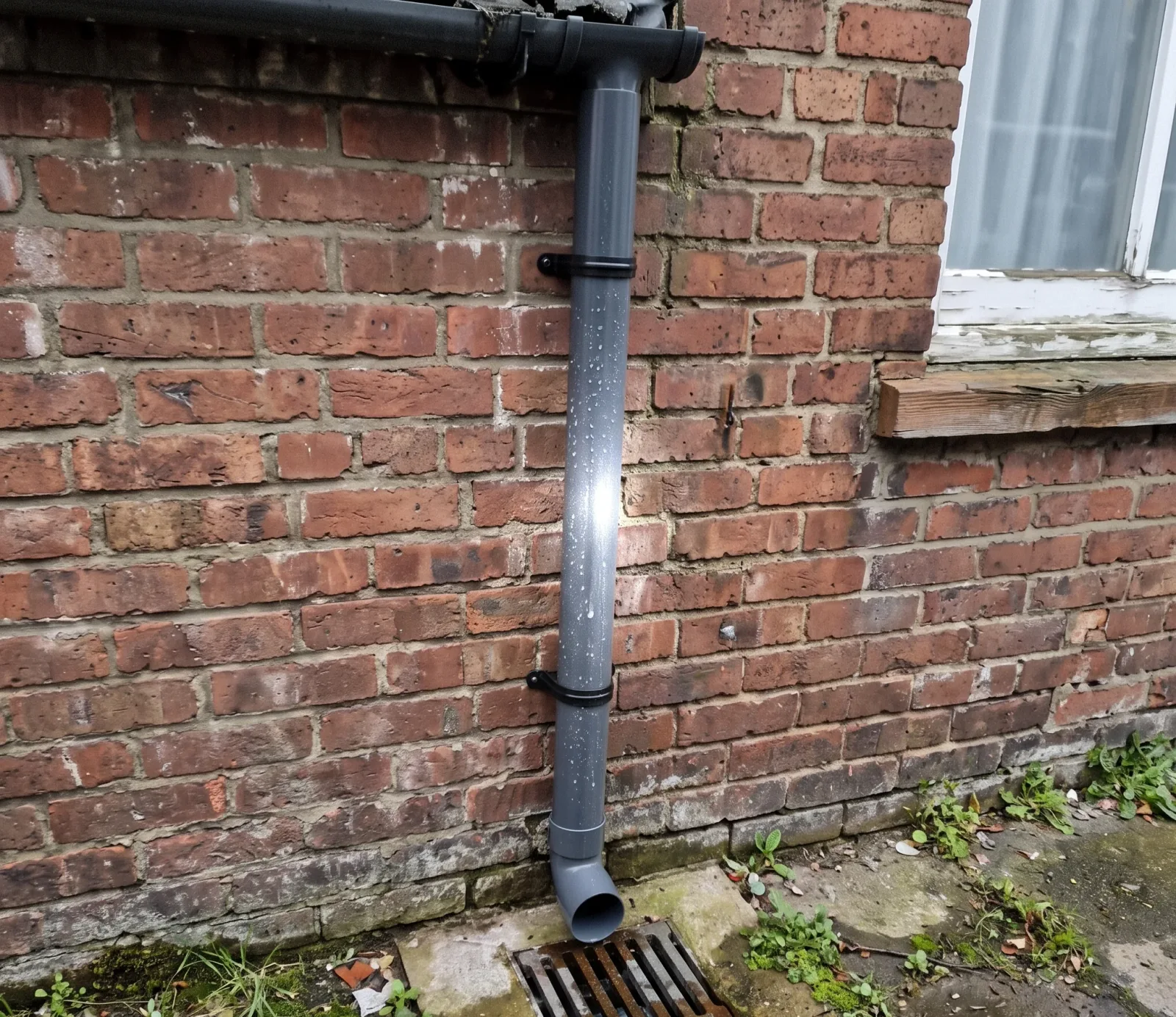
A gutter clogged with dust and leaf debris stops doing its job and just spills water straight down the fascia. That water tracks along the wall and settles into the caliche next to the slab. In Tempe, dense soil barely drains, so a downspout dumping right at the foundation keeps that ground wet for days after a monsoon storm. Extend it, or set a splash block, and send the runoff several feet clear.
How Far Is Far Enough
A downspout has one job after the gutter does its part: get the water away from the slab. Most guidance calls for discharging at least four to six feet from the foundation, farther if the yard slopes back toward the house. A short downspout that empties two feet from a Tempe home's slab just relocates the flooding problem instead of solving it.
Grading Undoes Good Downspouts
Grading matters as much as distance. If the soil right next to the foundation tilts down toward the wall rather than away, even a downspout extension won't help much, because the water pools and soaks in before it ever reaches open ground. Caliche layers common across Maricopa County make this worse, since water sitting on hardpan drains far slower than in sandy soil.
The Splash Block's Small Job
A splash block does the same job as an extension in miniature: it breaks the force of the water and pushes it sideways instead of letting it drill one deep spot next to the slab. Cheap and easy to reposition, a splash block is often the difference between water that scatters harmlessly and water that carves a channel straight back toward the house.
Guards Reduce, Not Eliminate
Gutter guards cut down on debris but don't eliminate cleaning. Palm fronds, dust from a haboob, and fine grit still collect in the mesh or along the gutter's low points. A guard that's never inspected can still trap enough silt to slow the flow, so it needs a check on the same rough schedule as an uncovered gutter, just less often.
Dust Clogs Like Debris Does
Tempe's dry stretches mean gutters fill with dust, not just leaves, and dry grit packs down harder than wet debris once a monsoon storm hits it. A gutter that looked clean in May can be half-blocked by July from windblown dust alone, which is why a pre-monsoon check matters even for homes without much tree cover nearby.
A Seasonal Check That Works
The seasonal rhythm that works for most Tempe homes is a check before monsoon season ramps up in early summer, another after the heaviest storms pass in September, and a quick look following any haboob that dumped visible dust on the roof. Homes near mature landscaping, including areas around Papago Park, may need an extra pass in between.
Fascia And Soffit Damage
Fascia and soffit rot from a leaking gutter can be slow enough that owners write off the discoloration as cosmetic for a year or two. By the time the wood is soft to the touch, water has usually been getting behind the gutter's back edge for a while, wicking into the fascia board every time it rains hard enough to overflow.
Standing Water At The Slab
Overflow doesn't have to run down a wall to cause damage. Water pooling right at the foundation edge, next to a slab, can migrate under flooring near an exterior wall over time. In neighborhoods like The Lakes, where established landscaping puts more overhang above the gutter line, checking for standing water after a storm is worth the extra ten minutes.
The Downspout Still Matters Most
None of this replaces a downspout that discharges water somewhere useful. A gutter can be spotless and still send a flood of water against the foundation if the downspout dumps it one foot from the wall. Extensions and splash blocks are cheap compared to drying out a soaked wall cavity later, and they take an afternoon, not a weekend, to install.
A Cheap Habit Worth Keeping
Rentals near ASU and Apache Boulevard often go years without anyone checking the gutters at all, since neither a landlord's maintenance crew nor a tenant thinks of it as their job. A five-minute look twice a year, plus attention after any big dust storm, catches most of what turns into a wet wall months later. It's the cheapest habit a homeowner or a landlord can keep.
Dealing with this in your home?
A rental near Apache Boulevard can run fine through the summer, then take on water when a flood irrigation gate off Warner Road stays open too long. Tempe's caliche layer barely drains, so water pools against the slab foundation and finds the door faster than an ASU student expects.